University|07-16-2026
Agentic AI as a driver for innovation
No topic moves the business world quite like artificial intelligence. The next step after chatbots, agentic AI, is still in its early days.
What we are talking about are systems that no longer just respond to input but pursue goals on their own. They make decisions, set processes in motion and correct themselves. At first that sounds like a technical detail. But the questions that really matter are not technical ones. They concern organizations, markets, public administration and, in the end, the trust of the people who are meant to work with these systems.
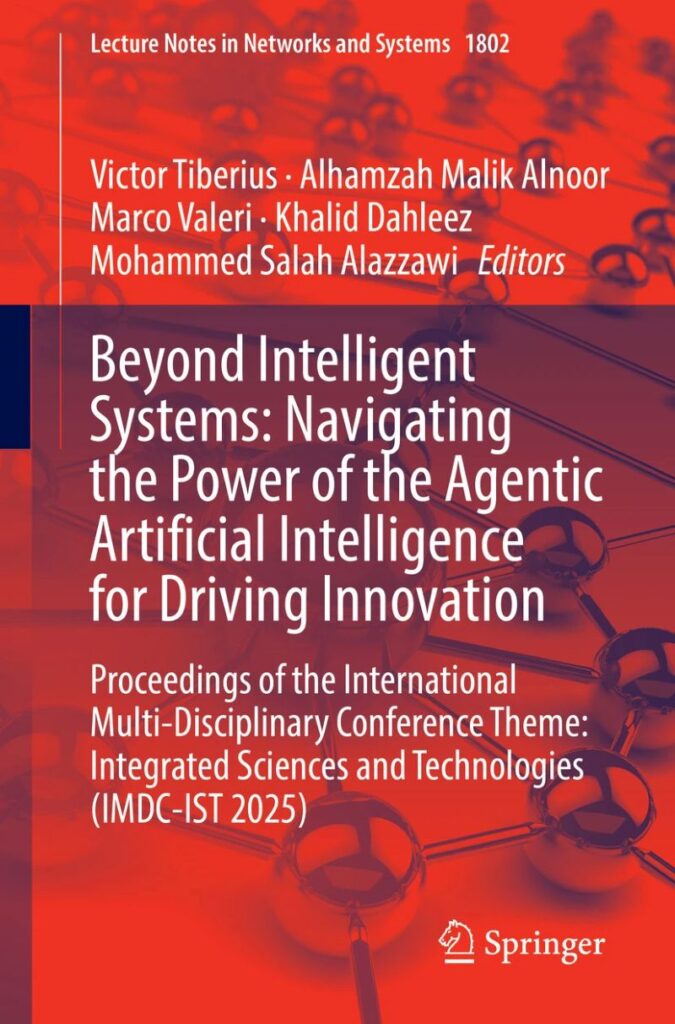
The gap between the buzzword and solid knowledge about AI agents was one of the reasons why I took on the editorship of this volume together with four esteemed colleagues:
The volume brings together the papers from the International Multi-Disciplinary Conference IMDC-IST 2025. In the end, it grew to 49 papers across roughly 860 pages. That number alone says something about the level of interest in the subject.
That is why we deliberately cast the book wide. The contributions come from healthcare, education, finance, energy and the public sector. One paper looks at how autonomous systems are changing work at what is known as the street level of public administration, meaning the places where caseworkers decide on applications and entitlements every day. Another asks how knowledge work and digitalization interact in hospitals, drawing on data from the health sector in Baghdad. Others deal with fraud detection in digital banking, with tourism and cultural heritage in Iraq, or with how lecturers view AI in teaching.
One thread still runs through almost every chapter. As soon as a system acts on its own, the question of responsibility shifts. Who is liable when an autonomous application makes a decision that later turns out to be wrong? How much control do we hand over, and at what point should a human keep the final say? The opening chapter sets the frame here and links agentic AI directly to innovation, governance, sustainability and trust. These four ideas come back in many of the papers, sometimes stated outright, sometimes between the lines.
Conference proceedings are a snapshot, and this one shows a field that is still taking shape. What it offers is sound methods, case studies you can follow and retrace, and a set of research questions for others to build on. For doctoral students and researchers who want to get into the topic, that is often worth more than a quick claim that is already outdated tomorrow.
Whether agentic AI will live up to the expectations now being placed on it, no one can honestly say today. I am cautiously optimistic about it and at the same time skeptical of the biggest promises. For me, the value of a volume like this lies in exactly that tension. It records what we really knew at a given moment and separates that from the marketing.
My thanks to my co-editors Alhamzah Malik Alnoor, Marco Valeri, Khalid Dahleez, and Mohammed Salah Alazzawi and the authors for their insightful papers!
Reference:
Tiberius, V., Alnoor, A. M., Valeri, M., Dahleez, K., & Alazzawi, M. S. (Eds.) (2026). Beyond intelligent systems: navigating the power of the agentinc artificial intelligence for driving innovation. Cham (SpringerNature). doi:10.1007/978-3-032-15806-2